HVAC Temperature Probe: Avoid Costly Selection Mistakes
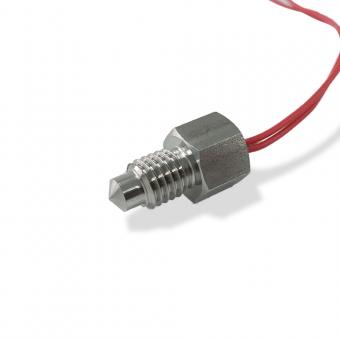
Apr 16, 2026In practical terms, an HVAC temperature probe is not just a sensor. It is a complete sensing assembly designed for real environments such as ducts, pipes, chillers, AHUs, and control cabinets. A typical probe includes:
The sensing chip is rarely the weak link. In most failures, the problem comes from the surrounding structure: sealing, probe length, placement, or material choice. That is why two probes with the same accuracy spec can behave very differently once they are installed.
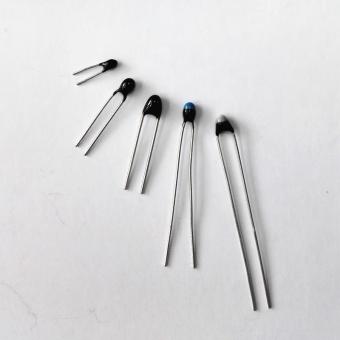
Different probe types measure temperature in different ways, and that difference matters more than many buyers realize.
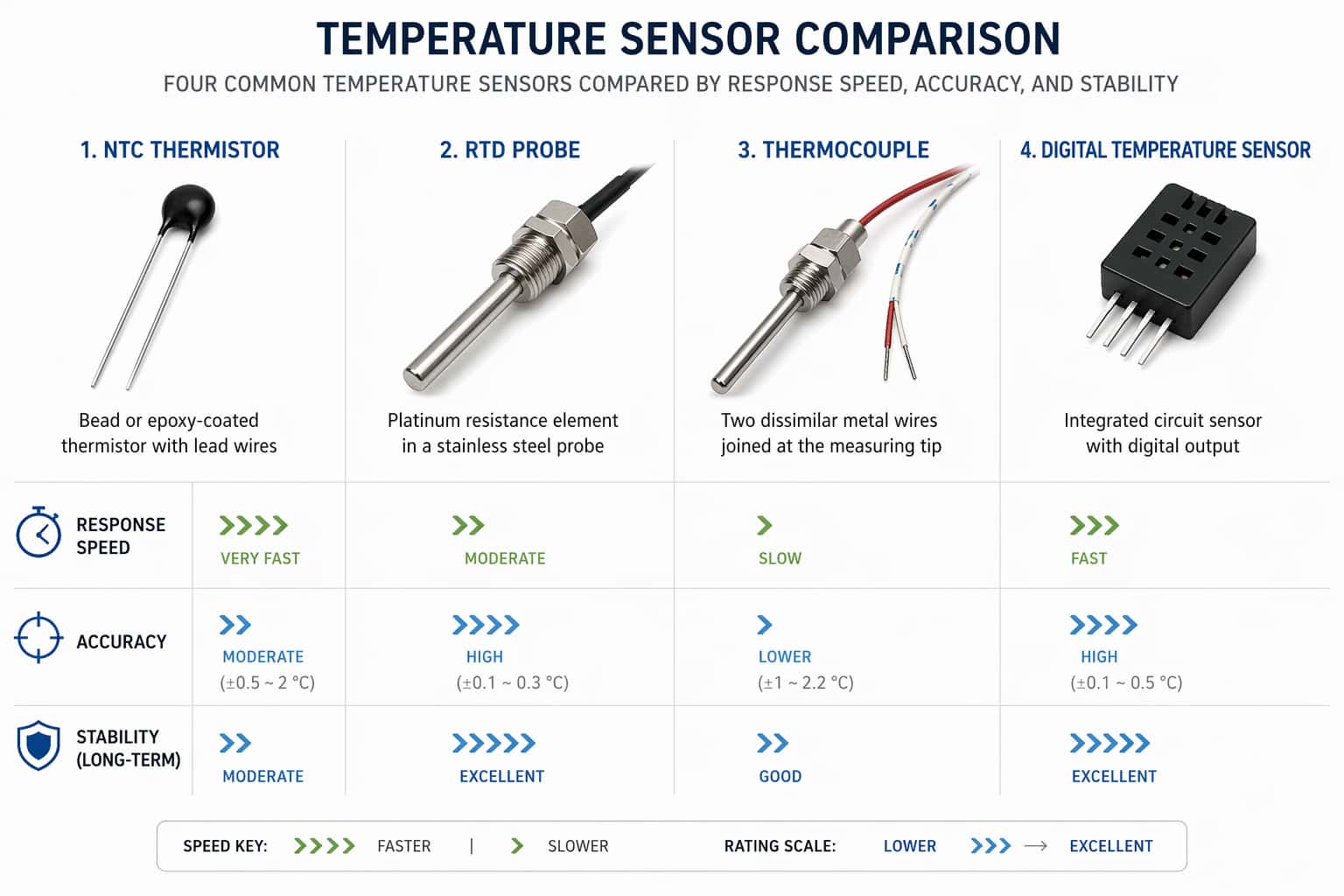
In HVAC applications, NTC and RTD dominate for a reason: they strike the best balance between cost, response, and stability. RTDs are often preferred in high-precision BMS or energy-monitoring systems, while thermocouples make sense only when the temperature range truly demands them.
A mistake I see often is using a thermocouple simply because it sounds more “industrial.” In HVAC, that usually adds noise, complexity, and calibration effort without delivering real value.
Datasheets are full of numbers. Only a few of them matter once the probe is in the field.
| Parameter | What It Means in Practice |
|---|---|
| Accuracy | Affects energy calculation and control logic |
| Response time | Determines how fast the system reacts |
| IP rating | Indicates resistance to dust and moisture |
| Drift | Shows how stable the probe stays over time |
| Thermal contact efficiency | Often the biggest source of real-world error |
A probe with excellent lab accuracy can still perform poorly if it is installed badly. In HVAC, the final reading is shaped as much by contact, airflow, insulation, and placement as by the sensor itself.
Temperature probes do more than measure. They steer control decisions.
Three functions depend heavily on probe quality:
A small temperature error can distort load calculation, trigger false alarms, or hide a real problem until it gets expensive. That is why probe selection is not a component decision; it is a system-performance decision.
For water systems such as chillers, boilers, and hydronic loops, this is usually the first decision that matters.
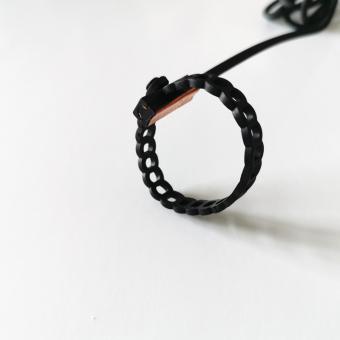
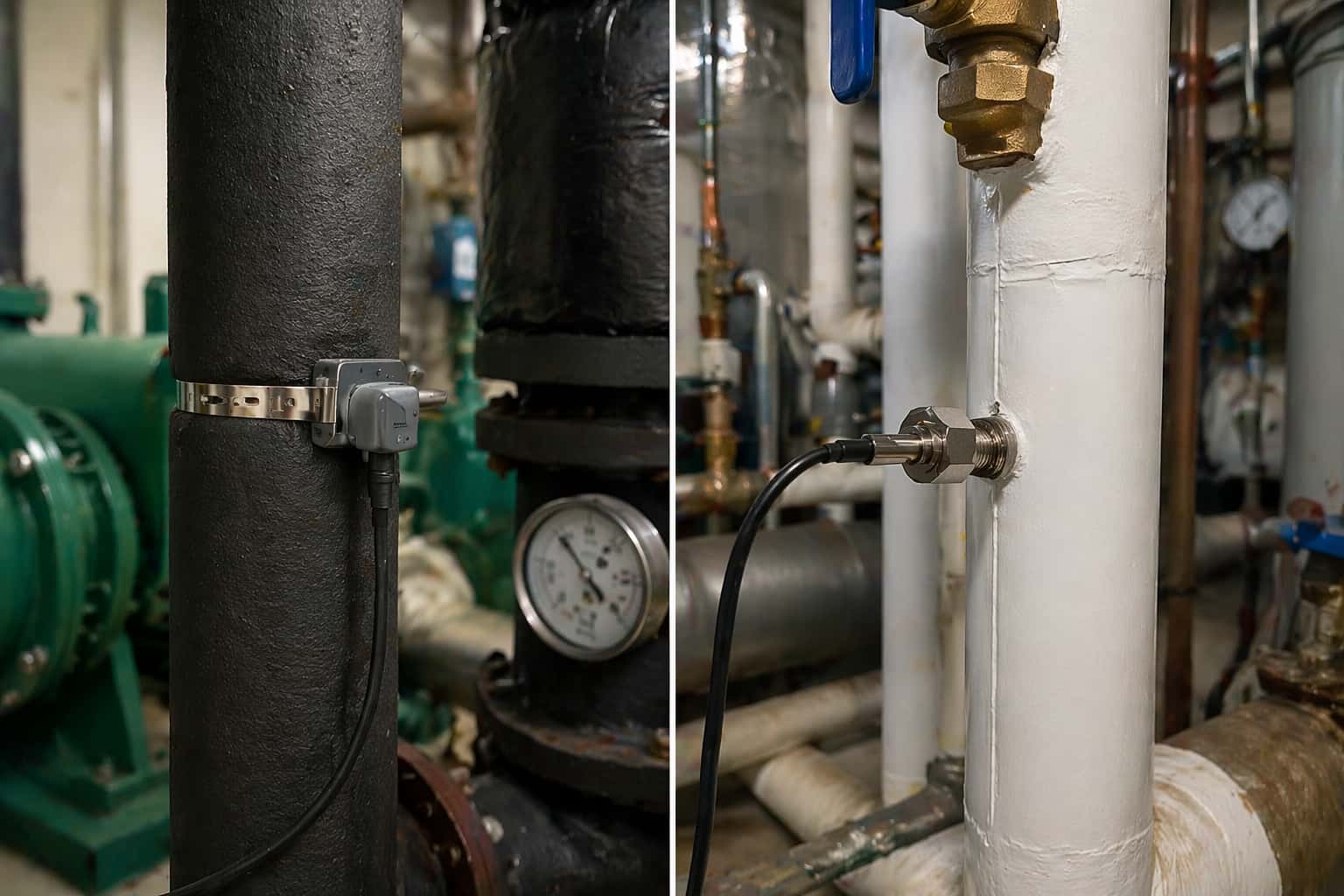
Clamp-on probes are mounted externally on the pipe.
Strengths:
Limits:
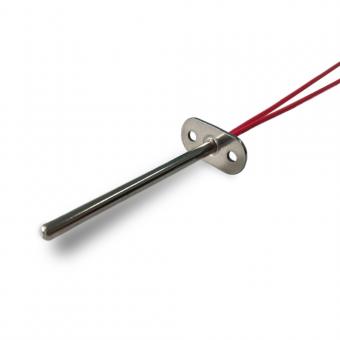
Immersion probes are inserted into the fluid, often through a thermowell.
Strengths:
Limits:
My rule is simple: use clamp-on sensors for retrofit work, diagnostics, and temporary checks. Use immersion probes when the reading will drive control decisions.
Air inside a duct is rarely uniform. Stratification, turbulence, and uneven mixing can all distort a single reading.
That is why duct averaging probes exist.
A single-point probe measures one location.
It works best when:
An averaging probe samples temperature across a longer section of duct.
It works best when:
If the air is not uniform, a single-point probe is only telling part of the story. In AHU systems, that can lead to coil control errors, comfort complaints, and wasted energy.
This choice is not just about convenience. It is about what the measurement is supposed to do.
Wired sensors are still the safest choice for permanent control loops. They are stable, battery-free, and easier to trust in long-term BMS use.
Wireless probes are excellent for commissioning, balancing, diagnostics, and temporary troubleshooting.
Their advantage is speed. Their weakness is dependence on battery health, signal quality, and app stability.
A common mistake is treating wireless probes as the backbone of a critical system. That usually creates avoidable failure points.
| Sensor Type | Accuracy | Response | Stability | Cost | Typical HVAC Use |
|---|---|---|---|---|---|
| NTC Thermistor | High | Very fast | Medium | Low | Duct, general HVAC |
| RTD (Pt100/Pt1000) | Very high | Medium | Excellent | Medium-high | BMS, energy systems |
| Thermocouple | Medium | Fast | Lower | Low | High-temperature use only |
| Digital Sensor | High | Medium | Good | Medium | IoT / smart systems |
The real decision is not “which sensor is best.” It is “which sensor fits the application without creating extra noise, cost, or maintenance.”
Before comparing products, define the system context.
Small systems usually reward simplicity. Large systems usually reward stability.
This is where many selection guides fail: they list products without matching the measurement medium.
For air:
For water:
If the probe does not match the medium, no amount of calibration will fully rescue the result.
Not every project needs the same level of precision.
| Budget Level | Recommended Strategy |
|---|---|
| Low-cost | NTC with correct installation |
| Mid-range | RTD at key points |
| High-end | RTD plus averaging plus calibration |
A better sensor with poor installation still loses to a mid-range probe that is mounted correctly.
If you cannot answer those five questions clearly, you are not ready to choose a probe yet.
A commercial AHU used a single-point NTC where a multi-point averaging probe should have been used. The sensor itself was not defective. The problem was the selection logic.
After switching to an averaging probe and moving it across the duct width, the reading became more stable and the control behavior improved.
That is the pattern I see most often: the system did not fail because the sensor was bad. It failed because the sensor type did not match the physics.
Before installation, verify the application first: air, pipe surface, or liquid immersion. The wrong mounting method can do more damage than the wrong sensor spec.
A basic installation kit usually includes a drill, fitting hardware, sealant, cable ties, insulation tape, and a calibrated reference thermometer. For duct work, place the sensor where airflow is representative, not near a coil edge, elbow, or heat source.
A sensor cannot compensate for a bad location.
For duct systems, start by checking whether the chosen point reflects mixed airflow. In large ducts, averaging probes are often the safer choice because they reduce stratification error.
For pipe systems, clamp-on sensors are quick, but the contact surface must be tight and insulated well. Immersion probes are more stable because they measure the fluid directly.
If sealing is poor, the probe often ends up measuring room conditions instead of system conditions.
Insertion depth should be treated as a real engineering variable. Too shallow, and the probe may read boundary-layer air. Too deep, and you may create stress or unnecessary resistance.
For averaging probes, the sensing length should cover the active air zone so the probe reflects the actual duct average rather than a local pocket.
If you are using wireless or Bluetooth probes, pair them only after the probe is mounted and thermally stable. Wireless is useful for commissioning, but the physical installation still has to be correct first.
The app reading is only as good as the mounting behind it.
Calibration only matters if the reference chain is credible. Use a stable reference source, compare the probe at multiple points across its operating range, and document the deviation.
A practical field sequence looks like this:
Good calibration is not a quick comparison against another unknown sensor. It is a controlled check against a trusted reference.
Before sign-off, verify three things:
If any one of those is wrong, the reading is suspect even if the sensor is technically working.
When a system behaves oddly, do not start by replacing the sensor. Start by checking ΔT.
If ΔT is unstable, the issue may be airflow or placement.
If ΔT is consistently off, the issue may be drift or miscalibration.
If the reading is slow to respond, the problem is often thermal contact or probe lag.
In many cases, the sensor is not dead — it is just badly supported.
Wireless probes can save time, but they also add a new failure layer.
Common issues include:
A good first check is always the battery. After that, rule out interference and compare the result with a wired reference sensor.
Wireless is a tool for commissioning and troubleshooting. It should not be the only source of truth in a critical control loop.
Sensors usually do not fail overnight. They drift, slow down, or become less reliable over time.
Signs that replacement may be due:
Most “sensor failures” are really environment mismatches, sealing problems, or long-term degradation.
A practical maintenance rhythm is usually:
Preventive maintenance is boring, but it is cheaper than replacing probes that were never truly broken.
In HVAC instrumentation, brand comparisons are often distorted by packaging, app polish, or lab specs. In the field, the real questions are simpler:
Focusens is positioned around OEM and industrial HVAC use, with an emphasis on system-level stability, custom integration, and batch consistency.
Best fit: fixed installations, AHU systems, and energy-monitoring projects
Testo is known for its measurement ecosystem and app-driven workflows.
Best fit: commissioning, diagnostics, reporting, and service work
Fieldpiece is built for speed and field-service convenience.
Best fit: residential and light commercial HVAC service teams
Appion is better known for refrigeration and vacuum service tools than for being a primary temperature-probe brand.
Best fit: supporting HVAC service workflows, not core temperature measurement
| Attribute | Focusens | Testo | Fieldpiece | Appion |
|---|---|---|---|---|
| Air duct stability | Very strong | Strong | Medium | Low relevance |
| Pipe measurement reliability | Strong | Strong | Strong | Medium |
| Wireless stability in mechanical rooms | Strong in custom setups | Variable | Strong | Low |
| App ecosystem strength | Medium | Very strong | Very strong | Low |
| Long-term drift control | Strong | Medium-high | Medium | Limited relevance |
This is one of the most misunderstood ideas in HVAC instrumentation.
Lab accuracy is not the same as system accuracy.
A very precise sensor can still perform poorly if it is:
That is why the most expensive probe is not always the best choice. The best probe is the one that remains accurate after installation.
Technicians often choose based on the job at hand:
Tools win jobs. Stable systems win buildings.
An HVAC temperature probe is not a standalone smart device. It is a data source inside a larger control chain.
That chain usually includes:
Common connection methods include:
The probe does not “think.” It only measures. The controller and BMS decide what to do with that measurement.
A typical chain looks like this:
Temperature probe → controller → BMS network → analytics / cloud platform
Each layer has a different job:
Best for large commercial buildings and multi-vendor systems.
Best for equipment-level communication and simpler control architecture.
Still valuable because it is simple, direct, and reliable.
In many real systems, analog remains the fail-safe layer even when the building is otherwise “smart.”
HVAC systems are increasingly moving toward hybrid architectures:
Three trends are becoming harder to ignore:
In AHU systems, probes usually support:
In VAV systems, room temperature data helps adjust airflow dynamically.
Bad placement can create false control loops, which is one of the most expensive mistakes in HVAC automation.
The most common failures are usually not hardware failures.
They include:
A sensor can be physically correct and still fail the system if the data is mapped badly.
The role of the temperature probe is changing. It is no longer only a measurement point. It is becoming an input into predictive control.
Modern HVAC systems use temperature data to detect drift, inefficiency, and early failure before the problem becomes visible to occupants.
Temperature data is useful when it supports:
The most valuable signal is usually not a single reading. It is the pattern over time.
A coil problem, for example, often appears as:
That is the kind of change AI can catch early, long before a comfort complaint shows up.
A large share of HVAC energy waste comes from weak feedback loops rather than broken equipment.
Temperature probes help reduce waste in areas such as:
Even a small sensor drift can quietly push a building into the wrong control behavior for months.
A strong lifecycle strategy includes:
Most probe problems are cumulative, not sudden.
A few trends are already shaping the next wave of HVAC sensing:
The future is not just about more sensors. It is about better interpretation of the data they produce.
An HVAC system is only as smart as the temperature data it trusts.
If the probe is chosen correctly, installed correctly, calibrated correctly, and maintained correctly, it becomes more than a component. It becomes a control asset that protects comfort, energy performance, and long-term system reliability.
No.1 XiSan Road, Electromechanical Industry Park , High&New Tech.Zone. Hefei,Anhui,China
tél : +86-551-69109668
Whatsapp : +86-13339100504
e-mail : info@focusens.com
Skype : melodyliu520






 +86-551-69109668